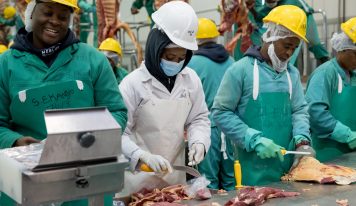
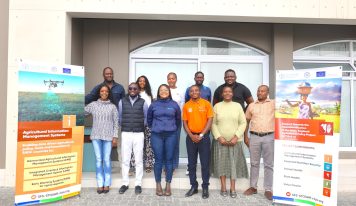
The Annual Symposium, which has grown over the past 25 years marks a significant milestone in the Bank`s history, celebrating a quarter-century of impactful dialogue and collaboration that has contributed to Namibia`s economic policy landscape and development journey.
The symposium is also well known as a unique platform for thought leadership and innovative dialogue on Namibia`s economic challenges and opportunities. The 2024 symposium gathered distinguished speakers who shared invaluable insights and strategies for integrating Namibia’s agricultural output into global value chains.
In his opening remarks, Governor of the Bank of Namibia, Mr. Johannes !Gawaxab underscored the importance of the selected theme, highlighting the critical role of the agricultural sector on Namibia’s path to sustainable development.
He further emphasised that 70 per cent of Namibian’s livelihoods depend on agriculture, and thus the need for sweeping reforms to adequately support growth in the sector. Governor !Gawaxab stated, “Part of these reforms is empowering farmers through access to finance and providing support through infrastructure development for storage, processing, quality testing, and value-addition”. He further highlighted the importance of infrastructure, partnerships, farmer-centricity, and policies tailored to support farmers, particularly smallholders, in accessing international markets.
Carl H Schlettwein, Minister of Agriculture, Water and Land Reform (MAWLR) delivered the keynote remarks in which he expressed his delight that this year`s symposium has rightly elected to zero-in on the role of agriculture and agro-value chains. He stated that to better utilise the agricultural potential of Namibia, the frontiers for inclusive growth in the agri-sector needs to be scalable through the value chain approach, from farm to fork; that is, from the primary activities of production to preservation, processing, distribution and marketing.
According to Schlettwein, the government has invested in the Green Scheme Projects with the objective of securing at least 27 000 hectares of land under irrigation, while developing similar strategic projects such as the Hardap irrigation scheme. Considered alone, the schemes are sufficient to enable the country to achieve self-sufficiency in basic staple foods once effectively utilised. The domestic private sector, agri-entrepreneurs and financiers are called upon to take advantage of these opportunities.
The government has invested in the Green Scheme Projects with the objective of securing at least 27 000 hectares of land under irrigation, while developing similar strategic projects such as the Hardap irrigation scheme.