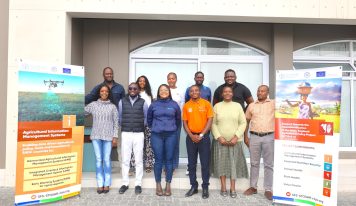
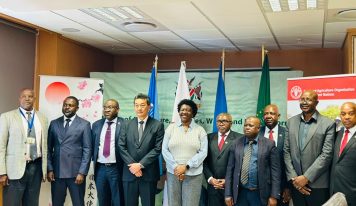
ANAW and OWA host workshop to raise awareness on caged chicken farming in Africa
The Africa Network for Animal Welfare (ANAW), in partnership with the Open Wing Alliance (OWA), hosted a media workshop in Windhoek to raise awareness about the growing use of battery cages in poultry farming across Africa. The workshop aimed to equip journalists with accurate information on chicken welfare so they can better educate the public on the impacts of caged farming.
ANAW, an international NGO headquartered in Nairobi, works across the continent to promote compassion and protection for animals. Guided by its vision of a world where people show compassion, care, and protection to all animals, ANAW has been at the forefront of animal welfare advocacy on the continent.
Representatives from ANAW told journalists that battery-cage systems, though increasingly common, are associated with several welfare concerns: including bird stress, vent and feather pecking, overcrowding, and increased susceptibility to sudden death syndrome.
Speaking virtually, ANAW CEO Josiah Ojwang urged the media to take an active role in shaping public understanding of animal welfare. He stressed the link between animal treatment, environmental health, and human well-being, arguing that cage-free systems align better with humane and sustainable production. He noted that Africa, home to an estimated 1.53 billion people, has over 2.3 million chickens, making poultry the most widely farmed livestock on the continent.
“All animals deserve to live in freedom, with their basic needs met and it is well documented that stressed animals tend to produce lower-quality meat” he said.
Attending the workshop was Sebastian Mwaza, a representative from ANAW who highlighted that animal welfare remains a relatively new concept in many African countries, making media education essential. He emphasised that ANAW’s work extends beyond poultry but also includes other livestock species.
Dr. Dennis Bahati, another representative from ANAW who was also present at the workshop underscored the importance of chicken welfare as demand for affordable protein rises with Africa’s growing population. He presented the internationally recognised Five Freedoms framework used globally to assess animal welfare: —freedom from pain, hunger & thirst, discomfort, fear & stress, and the ability to express natural behaviours—as a benchmark for humane farming.
Based on ANAW’s studies in East, West, and Southern Africa, Dr. Bahati reported persistent gaps across the chicken value chain, including disease management, transportation, housing, and policy regulations.
The workshop called on journalists to become advocates for better animal welfare practices across the continent, ensuring that the public remains informed about the implications of battery-cage farming and the benefits of humane alternatives.